
How do we go beyond awareness days?

by Ian Curwen

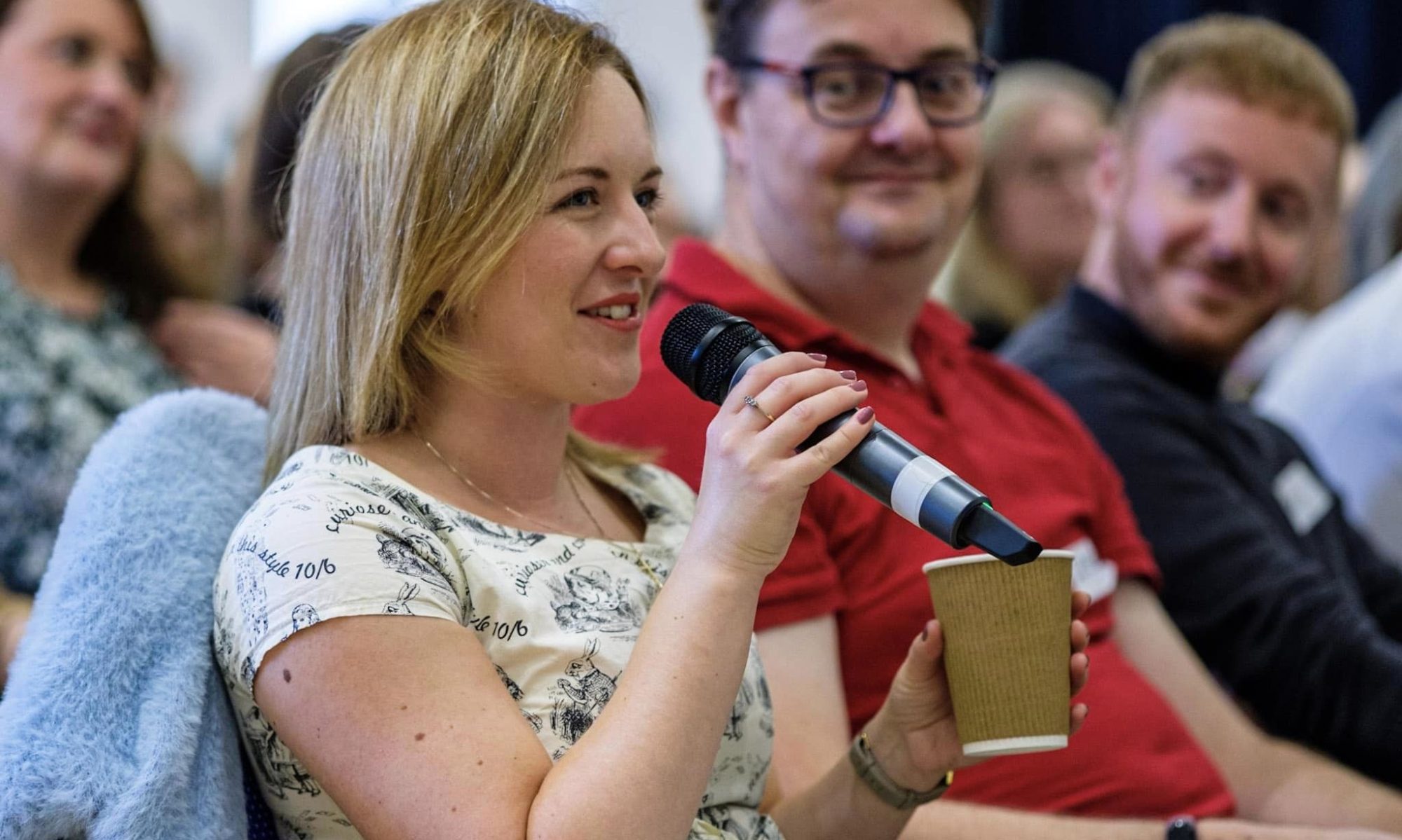
At Comms Camp Scotland this month, I led a session on diversity and inclusion –  moving beyond awareness days.

Awareness days are, as the name suggests, a tool for raising awareness. Raising awareness is more likely to be at the start of your diversity and inclusion journey.

For me, this means that if your diversity and inclusion communications calendar is largely made up of awareness days, then it’s time for a rethink.

I was pleased to see a busy boardroom at the Queen Margaret Union for the session. I was even more pleased to facilitate an engaging discussion with people willing to share their organisation’s approach and even their own experiences.

Thanks to everyone who joined the session and contributed. I’ve summarised my observations below. I’d welcome your thoughts too.

How diverse is your team?

We started with a prompt to consider how diverse our teams are. If they are not, then how can we communicate authentically to audiences we might not represent?

One of the participants commented on the small number of non-white faces at the event. This was a really interesting observation. As a white man, this wasn’t something I had considered until it was mentioned. That itself is telling.

It’s a long journey

The journey to being a more diverse organisation, where everyone can be their true self, is a long one. At times it can be isolating – especially if others don’t agree with the approach you’re taking. 

This means you need to be resolute and steadfast in your commitment. It requires the visible buy-in of leadership – especially if you plan to make changes to your organisation, its policies and priorities. 

One participant mentioned their chief executive grasping the issue of diversity. They reflected that, “the chief exec must have broad shoulders.”

While it is a journey, it’s not one with a clear destination. Things will change and evolve and there will be new challenges along the way. There is always further we can go and more we can do.

Awareness days can dilute or concentrate

In communications teams, we’re a bit cynical about awareness days. We know they can be overused, and they can appear tokenistic if the way we mark them isn’t properly considered.

Consider how much more powerful is it to see an organisation that celebrates diversity and is representative of its workforce and community in all its communications, rather than once a year.

That said, awareness days can be an effective way of introducing a topic or exploring specific challenges or issues for a community. They’re a way of helping someone walk a mile in someone else’s shoes. 

But, if you’re doing that, be careful not to drown out well crafted, engaging and insightful communications with volume.

In the room, we felt that fewer, higher quality communications were the way to go.

Curiosity and authenticity – speak to people

Awareness day communications should be those that enlighten your audience or explain a situation. 

As communicators we’re curious storytellers. This curiosity should help us find the interesting stories to tell. They should be interesting because they help people understand the community you’re talking about. 

If you belong to that community, they should sound authentic. 

The way you ensure they’re authentic is by reaching out to that community. Speak to them.  

I think that’s probably obvious, but it’s always worth remembering.

Expectation management

When you engage with an audience or a particular community or network, you should be honest about why you’re reaching out to them, what you are able to do for them, and how this will balance against your other priorities.

Where I work, we have 11,000 employees and 17 employee networks. They’ve all got some brilliant stories to tell, but we must ensure they’re not competing with everything else we want and need to say. 

If you’re telling an individual’s story, how are you going to support them and give them a safe space to do so? What do they get in return for sharing their story? 

If you’re reaching out to a community group, can you help them achieve their aims?

If you’re supporting a network, what are you asking of them? Is it aligned to their scope and expectations?

In the room, we heard about an organisation’s women’s network and how its main role was to organise social events like theatre trips. There is nothing wrong with that if the purpose is clear. But don’t pretend it’s a voice for women in the workplace. Don’t use it that way. 

In an ideal world, your network will have terms of reference and clear objectives, and you’ll be able to support them with clear communications ones.

Talk the talk, walk the walk

If your organisation is talking more than it has in the past about diversity and inclusion, what else is it doing? Is it walking the walk as well as talking the talk? 

There are lots of ways this can be demonstrated. A simple example that was mentioned in the room was committing to diversity on panels – agreeing not to speak at events that have a male-only or white-only panel of speakers – and telling the organisers why you are declining. 

How do you quantify and evidence progress?

Final thoughts

It was great to lead a session about a topic I feel passionate about. I loved hearing people’s views and experiences. 

The room felt united in the view that we need to move past awareness days to promote diversity. We agreed we need to be authentic and understand and engage our audiences to achieve that.

What else?

The session lasted 40 minutes and we packed a lot into that time. But there was a lot we didn’t cover, which I’d have liked us to. 

We only briefly touched on the current, less tolerant climate. We didn’t discuss intersectionality and how that shapes the narrative. We also didn’t explicitly cover the importance of allies to so many of our employee networks and community groups. Perhaps they’re pitches for the next Comms Camp.

Ian Curwen is a stakeholder relations officer working in the nuclear sector.

5 ways to use audio to connect with the public and your team… for free

You may have met Mark Steadman at commscampnorth. He came to sponsor his first unconference and ran a great session. So much so we asked him to write a blog post for those who couldn’t make it.

by Mark Steadman

The human voice is a phenomenal tool for building trust. We multiply that effect when we wear headphones, as the voices we listen to are physically so close to us.

I brought this up in the session I ran at CommsCamp North. But there are other ways the voice can be impactful and to help us create connections. So here are five ways you can use audio to bring your organisation and its service users closer together.

If you want a rundown of the equipment you’ll need, you’ll find that at the end of the post.

Option 1: Smart speaker bulletins

Where I work, we call Alexa “the lady in the tube”. If I ask her for a flash briefing, she’ll deliver a short burst of audio from my preferred sources. Google Home offers something similar too. People often give smart speakers to older relatives as gifts, as they offer useful things like voice calls and reminders.

Smart speaker bulletins are a great way to integrate your messaging into people’s homes. Adding your content to people’s devices is pretty easy and you can explain it in a handout or a short video.

You can use bulletins to let people know about important events in their area. * *

To become a bulletin source, you need to setup a free developer account with Amazon and/or Google. Then you can create a podcast, hosted for free on Buzzsprout , and link your feed to the bulletin you’ve created.

If you don’t have a smart speaker, you can use the simulator available in your developer account.

You can publish your audio to Apple Podcasts and Spotify, or keep it exclusive to smart speakers.

Option 2: Turn your newsletter or blog into a podcast

When we think about getting into podcasting, we can sometimes worry about having enough content. Well, a podcast is a way to get extra value from the work you’re already doing.

If you have a regular blog or a newsletter, you can make it more accessible by recording it as a podcast. This helps visually-impaired readers, and busy people who want to stay in touch but don’t have the time to read.

Here, all you need to do is sit and read through the article you’ve written. Add a brief intro and outro plus a call-to-action, like inviting the listener to your website. Make a few simple edits, export your audio file and upload it to the web.

  • You can host your audio with Anchor for free, but they’ll fight you if you want to publish outside of Spotify. It’s currently still doable, but we don’t know how long for.
  • The newsletter software Substack now offers podcasting hosting too.
  • If you’re just doing simple edits to audio, like cutting out mistakes, Audacity is a handy and free tool.
  • I have a course on developing a podcast from a blog or newsletter. Use the code commscampnorth for 50% off the price.

Option 3: Go in-depth

Podcasts work best when they’re regular and consistent in format. But there’s another way you can use audio to provide useful information.

Whether you want to share audio from a meeting or go deeper into a topic, you can host one-off audio on Soundcloud. It’s free, and you can embed it as easily as you would with YouTube.

Budget permitting, you could explore a limited-run series. Let’s say we’re gathering an aural history of residents from a particular background. A series of stories, produced with a little music and narration can be a warm and intimate way to explore a topic in detail. It’s also a wonderful way to engage communities.

Tools like Descript make it easier than ever to put together podcast audio. When you import audio, it’s transcribed by their AI, and you edit the sound by editing the text. It works just like a Google doc. You can then add music, sound effects, and other recordings easily. Plus you’ll be on your way to having a transcript that makes the work more accessible.

Option 4: A right to reply

You can give the public a voice, and offer leaders the chance to share their responses by creating your own Question Time show!

You can record a Zoom conversation between a local representative and members of the public, and publish the audio. This is a great way to welcome people who don’t want to jump into Zoom, or find it daunting.

Or you can gather questions from the public in the style of Points of View. Provide an email address or a simple Google form where people can attach a short recording. Then send that to the person who needs to answer the question, and let them record their reply. Tie it off with a short intro and outro, and you’ve produced an episode without everyone having to be on the line at the same time.

Option 5: Create an internal podcast

If you work within a department with lots of people who are out and about, you can keep them up-to-date with a private podcast feed. This is especially handy for drivers who can’t spare the time to read a daily or weekly briefing.

There are a few things to consider around ease-of-access for listeners, and ease-of-admin for you. Most private podcasting options don’t work with Spotify, and the ones that do (like Supercast) will charge you. If you’re particularly worried about locking down your audio, I’ll briefly explain another route in a tick.

There’s less of an expectation of high production value for a private podcast, but don’t rule it out. I produce a couple and listeners benefit from feeling valued, heard, and addressed directly.

Wrapping it up

Here we’ve looked at a few different formats, some of which aren’t “traditional” podcasting, but all use the voice to connect us together.

  • Smart speaker bulletins are great ways to get up-to-the-minute info out to members of the public, especially those at risk of isolation.
  • You can make your blog or newsletter go further by bringing it to people who don’t have the ability or capacity to read it.
  • One-off audio stories or limited-run series allow you to go deep. And you don’t have to be a qualified audio engineer to make them!
  • Members of the public can get a right to reply by recording their questions, and allowing department heads to publish their responses.
  • There’s always someone on your team who doesn’t read the weekly email. Now you can give them a private podcast feed.

The gear you need

  • The Samson Q2U is a great mic to get started with, at less than £90.
  • If you don’t have a pair of headphones handy, these Audio-Technica ones sound good and don’t cost the earth.
  • To gather audio interviews, the Zoom (not that Zoom) H1n is a handheld recorder with an in-built mic. It records audio to a micro SD card, so it’s easy to transfer to a laptop.

And finally

As you can probably tell, I love talking about this stuff. If you’ve got questions about how to implement any of this, you can book a quick half-hour chat with me. Together we can run through your options, and find a solution to meet your budget.

THE EYES HAVE IT – CREATIVITY AND INSPIRATION AT COMMSCAMPNORTH

We’re really pleased to welcome back Touch Design as GOLDS sponsors for CommsCamp North. Do say hello to them if you are coming.

The eyes have it – creativity and inspiration at CommsCamp North
Touch will be setting the gold standard in October as a headline sponsor of the ever-wonderful CommsCamp North, this year being held in the West Yorkshire city of Bradford.

Tickets are of course once again a sell-out with hopeful attendees now needing to subscribe to a wait list for the chance to come along to one of the highlights of the year for public sector communicators and marketeers.

If you are fortunate enough to have got hold of a ticket, we can’t wait to see you at Bradford’s city centre arts venue in due course. We’ve been sponsoring the event for a number of years and delegates that we have met at the ‘unconference’ have often later become not only clients but good friends. Following the desolate online Covid years, it feels more joyous than ever to be able to see people again face-to-face and chat long into the evening.

In meeting team Touch this year, you may feel we’ve all gone a bit ‘googly-eyed’, and that won’t be the drink talking. Instead, to demonstrate the bottomless creativity inside each and every one of us, our display stand will have boxes of ridiculous googly eyes for you to customise the mundane objects around us and to transform them into faces of pure irreverent, genius. For an example of what we’re looking for, please meet Rexel, the excitable-looking office shredder.

Ahead of the event, you can fine-tune your creative instincts by looking for faces in everyday objects (‘facial pareidolia’, if you’d like to know). Sources of creativity and inspiration are all around us, and often, the spark happens when least expected. Keep an open mind, let ideas flow, and don’t try too hard. Everyone is creative in their own ways though, what works for some, does not suit others. There is no uniform way to be creative. You can practise at being creative though, and you can get better at being creative, and you can also give us a call, if you’d like, if you hit a brick door. We’re good at re-opening closed doors and walking down new hallways.

BEYOND THE WARM BANK: AMPLIFYING YOUR COST-OF-LIVING COMMS

A quality post from our quality GOLD sponsors CAN. They look at how public sector campaigns can help shore up finances against the fallout for their residents and local businesses. PLUS take part in our Priorities Poll for the chance to win sustainable beer or bath treats.

While national government makes the big fiscal decisions for how to deal with rising energy costs and inflation it’s local government organisations of all kinds that will be at the sharp end this winter dealing with the fallout on the ground.

For many local authority comms folks this has so far meant being asked to collect info on resources like ‘warm bank’ locations into a single webpage and promoting it on their organic channels. Mr Slee rounded up the most useful ways to communicate the cost-of-living crisis sourced from the Public Sector Comms Headspace group in a recent blog. One of the tips was, in fact, to steer clear of using the term ‘warm bank’…

As a digital advertising agency, we defer to comms professionals on this sort of thing. But we do have some ideas for how you can make sure your cost-of-living comms is amplified and lands with the right audiences, and how to support residents and businesses (including councils’ own trading services) through winter.

Reaching the right residents

  • That carefully sourced cost-of-living info page on your website could remain undiscovered by those who most need it if you rely on organic social media alone to promote it. Most people don’t follow public sector accounts. Both the London Borough of Hounslow and Wandsworth Council promoted their resource page with paid-for social media and programmatic advertising targeted at lower-income residents in the postcodes where they live.
  • Other London boroughs are focusing on the preventative end of cost-of-living campaigning, by promoting grants available for things like draught-proofing and low-cost heating methods through “Warmer Homes” campaigns.
  • Recently set-up Integrated Care Boards like North-East London ICB and South-West London ICB, are preparing for the additional pressures on emergency services this winter with awareness campaigns to encourage people to consider their local pharmacy, GP or NHS 111 first. These major on a long-term search strategy with a comprehensive set of keywords that people might Google in a panic when someone is unwell, and instead presents them with more considered alternatives than rushing to A&E.

Bolstering local businesses

Local businesses will be hit hard again after a tough time during the pandemic.

  • In the run-up to Christmas, when people might rather hang out at the local café and shops than use their own heating at home, it’s a good time to run a Support Your Local High Street campaign. With sales already down in city and town centres due to the pandemic (by up a year’s worth according to the Centre for Cities Annual Survey 2022), Telford & Wrekin and Haringey councils have introduced reward apps to encourage customers to shop and eat out locally.
  • Fulham BID’s longer-term campaign aims to enhance the reputation of its Broadway area as the first choice for locals and those in neighbouring boroughs for a whole range of occasions. They are running ads on social media and news and lifestyle websites encouraging people to stay local for everything from Saturday shopping splurge to Sunday lunch, with one-off campaigns promoting date nights and individual events.

Don’t forget the council coffers

A recent report from the District Councils Network estimated that inflationary and pay pressures could lead to a £900m budget shortfall over the next two financial years – with 66 per cent of the 183 network councils considering scaling back on community support and 37 per cent looking at cutting welfare support to bridge the gap. This at a time when demand for services is bound to grow.

Campaigns to market council trading services could help generate extra income. LGComms has just launched its National Procurement Strategy for Local Government in England 2022 with a useful section on creating commercial opportunities.

  • Surrey County Council’s Adult Learning service offers dozens of different courses with a “rolling enrolment” throughout autumn and winter – perfect for advertising with “always on” Google Search plus timely digital ad boosts for courses that are slow to sell. Many people now have the sort of flexible working hours that lend themselves to pursuing other interests.
  • The same applies to fitness. Telford & Wrekin Council is promoting a leisure offer with 12 months for the price of 11, and marketing it to 30-50s who might be working from home or hybrid-working nowadays.
  • And for a no-brainer way to generate income – councils can join the 100-plus public sector organisations reaping the financial rewards of advertising on their websites through our own Council Advertising Network!

Your priorities = a chance to win beer with non-alcoholic alternatives available

The examples above are all based on what our public sector clients are prioritising right now. We’re keen to find out how other local councils across the UK are prioritising spend on their comms campaigns during the current cost-of-living crisis.

Fill in our quick Priorities Poll 2022/23 and we’ll enter you into a draw for a bumper pack of beer or some posh bath-time treats from two sustainability hero businesses: Toast and Land & Water! The prize will be awarded to a randomly drawn entry after the poll closes on 28 October.
Find out what CAN is all about on our website, follow us on LinkedIn or Twitter, and sign up for our monthly newsletter.

Getting to Bradford for CommscampNorth

by Bridget Aherne

We thought we’dpost some details about how to get to Bradford by road, rail.

Kala Sangham is an arts centre in a converted Royal Mail sorting office inForster Court, Bradford and the postcode is BD1 4TY.

On the day, doors open at 9am and we’ll get started at 10am. Do get here as soon as you can to avoid the queue at the coffee machine. 

There is no parking at the venue itself. Blue badge parking is also VERY limited so do let us know by emailing dan@danslee.co.uk if you need a blue badge space.

By car 

There are a few car parks around the city centre. For the largest car park close to the venue head to Broadway Bradford shopping centre parking, BD1 1JR.

It’s £6 for the full day. 

Find the venue by leaving the car park through the shopping centre and then go outside through the exit next to Marks and Spencer. Kala Sangam is straight in front of you on Church Bank.

Bradford is also a clean air zone. If you are travelling in a vehicle to commscampnorth.

Check if it will be charged here

By rail 

We’ll run a walking train from both railway stations. Look out for two volunteers who will be waving a red and yellow linesman’s flag and a copy of the commscampnorth logo – airport arrivals lounge stylee. 

At 9.10am on the morning of the event they’ll depart for the short walk to the venue. 

There are two railway stations. We have Bradford Forster Square railway station at five minutes’ walk (postcode: BD1 4JB) and Bradford Interchange (postcode: BD1 1RX) which is an eight-minute walk away. 

Bradford Interchange station walking train 

For the Bradford Interchange walking train, head through the ticket barrier and down the stairs straight in front of you. We’ll be waiting at the bottom of the steps in the lower concourse. 

Bradford Forster Square station walking train

For the Forster Square walking train, head past the ticket office and bear to the right. Walk past the lift and we’ll be hanging around the city centre exit, just before the slope up in front of the Midland Hotel. 

By air 

You can come to Bradford International airport, Manchester International airport or from London Heathrow and then connect to the rail network. We have Jim coming from the USA by air.

SNAP UP A PLACE ON THE SOCIAL

For folk travelling a long way to Commscamp and often on their own, organisers offer up a chance to meet and greet the evening before.

This is traditionally done over a beer (or a soft drink) and curry and 2022 will be no different.

So, on Wednesday 12 October from 6pm, a few of us will gather at the lovely Sunbridgewells, an underground labyrinth of bars and event spaces in the centre of Bradford. There’s a nice wee video here that shows you how to get from outside Bradford City Hall to the venue.

If you can’t make that then you are welcome to come along to the curry at 7:30pm. Our venue this year is Omar’s Balti House. The venue is ‘bring your own bottle’ with no corkage charge.

To book a space, please complete the Eventbrite page so we can plan ahead and make sure you have a space.

Claim your space at the eventbrite here.

Looking forward to seeing you there.

HOW THE COMMSCAMPNORTH CAKE TABLE WILL WORK AND HOW YOU CAN HELP

by Kate Bentham

It’s been a few years since we have been able to gather round the CommsCamp cake table discussing if a Victoria sponge is better than a lemon drizzle, or if in fact cheesecake can be classed as a cake*, but I am beyond excited that we can do that this year in Bradford.

The cake table is the heart of any CommsCamp.

I’ve been lucky enough to be the Official Cake Table Monitor since the first CommsCamp in Birmingham in 2013 and for those who don’t know the situation with the cake table let me fill you in on a few pointers.

How the cake part works

  • The cake table only works because lovely people bake cakes and bring them along for others to eat. If you can, please bake a cake. It doesn’t have to be a showstopper. A batch of fairy cakes, a traybake or anything else that travels well will be much appreciated.
  • If you do bake you will be entered into the CommsCamp Star Baker competition. It’s a fiercely fought contest with prizes for the winner and 3 runners up.
  • If you’re not a cake baker, don’t worry, there’s no shame in bringing along a shop bought cake. Cake is cake at the end of the day, and we appreciate all cake.
  • We also need cake eaters, and not only because it’s amazing how conversations and networking improve with a bit of cake, but because we’re after your money. In return for a slice of yummy cake we ask those that can to donate to charity. Since CommsCamp started in 2013 our lovely attendees have raised £1000s for local charities. Proof, if proof were needed, that comms people are kind, generous and massive fans of cake.
  • This year all money raised from the cake table will go directly to Bradford Central Foodbank.  You can also help them out by bringing food or household goods as a donation. You can read more about why we are supporting this charity and what they need here.  So, think how much you’d pay for a slice of cake in one of those fancy coffee shops, and give it to this amazing cause instead.
  • Anyone who does donate, will be entered into a prize draw for some wonderful tat, sorry I mean preloved items, purchased from the nation’s finest charity shops. You might not know it yet, but you will have a sudden desire for a Harry and Megan teapot or a photo of the Leeds/Bradford airport runway.
  • At CommsCampNorth it’s OK to eat cake for all your main meals and any snacks in between. You’ll like it. It’s like when you get to eat chocolate for breakfast on Christmas morning. Perfectly normal.
  • As an experienced cake eater, my cake table survival tips are ease any cake guilt by visiting the gym the day before, wear baggy or elasticated clothes to allow for tummy growth, and bring the big coins to donate to Bradford Central Foodbank.
  • And remember, scientists have proven that all cake calories consumed during a CommsCamp don’t count. Bonus.

So, happy baking, happy eating, happy charity donating, happy CommsCampNorth. See you with your baked goods and foodbank donations at the cake table on Thursday 13th October 2022

Kate Bentham – or Cake Bentham – is official cake monitor at CommscampNorth and family information service manager at Shropshire County Council.

CommscampNorth is an unconference for public sector comms people and takes place in Bradford on October 13.

*Dan Slee says no.

HELP US PAY IT FORWARD: WE’RE SUPPORTING BRADFORD FOOD BANK THIS YEAR

by Josephine Graham

Are you looking forward to CommscampNorth? I know, it’s going to be great isn’t it. All that chat, and cake, and whatnot, it’s going to be brilliant.

But it’s not just all about learning, sharing ideas and reigniting our creativity with like-minded comms folk.

CommscampNorth is provided free of charge to the public sector comms community thanks to the generosity of our lovely sponsors.

Therefore, at every Commscamp event we ask our wonderful attendees and community to pay it forward, if you can afford to, by supporting our nominated charity.

Cost of living

This year the cost of living crisis is biting hard on families up and down the county. Foodbanks are facing huge demand, with reports of a 250% increase in online searches for “food banks near me” since March 2020. Meanwhile more than half of low-paid workers in the UK have had to use food banks in the last 12 months, according to research from the Living Wage Foundation.

Like all cities, Bradford has many local people living in crisis that need our help. We’re asking you, as a visitor to Bradford for CommscampNorth 2022, to support our chosen charity: Bradford Central Foodbank. The foodbank is part of the Trussell Trust, so you will be supporting part of a nationwide network of food banks that provide emergency food and support to people locked in poverty.

How you can help

You can help in three ways.

1. Bring a food/household goods donation

It feels nice to bring an actual thing along doesn’t it? We will have a donations table at CommscampNorth and will welcome all contributions of non-perishable food and household products, whether large or small. Popular items include tinned puddings, UHT milk, jam, tinned tomatoes, pulses, tea, coffee, loo paper and more.

You can see a longer list with more ideas here: Donate food | Bradford Central Foodbank

2. Buy a piece of cake or a raffle ticket at CommscampNorth

You know about the cake table right? And the tat raffle? OK, we don’t have space to explain those things here, but every time you buy a piece of cake or a raffle ticket at CommscampNorth your money will go to help the our chosen charity.

3. Support the charity online

Whether coming along CommscampNorth, or simply following the hashtag, you can support Bradford Central Foodbank with an online donation here: Donate money | Bradford Central Foodbank. Payments are made through a Just Giving page. If you add a message (you’ll need to click on ‘Add a message of support’ before confirming your payment) we can track how much we’ve helped raise online. This is optional as some people prefer to donate privately and that’s fine. If you would like your donation to be counted towards our total, please make sure your message mentions CommscampNorth, e.g. “CommscampNorth event attendee (personal donation)”.

Also, if you’d prefer to support your local foodbank, we get that. If we’ve inspired you to help them, then we’ll be happy with that.

Thanks in advance for any help you can give and looking forward to seeing you very soon.

Josephine Graham is marketing and communications officer – internal communications at Bradford City Council.

CommscampNorth is an unconference for public sector comms people and takes place in Bradford on October 13.

COMMSCAMP Q&A: JACKIE WEAVER

One of the good things about commscamp is to have an idea and then follow it… so wouldn’t it be good to have Jackie Weaver along became reality.

You may recall that Jackie became an internet sensation for her no messing handling of a Parish Council meeting.

She’s also turned campaigner taking up a series of issues to improve standards in local government.

We were delighted when she came to Commscamp Still At Home. Afterwards she completed an online Q&A too.

What did you think of Commscamp?

Sceptical at first but it was energising to be among so many people who were enthusiastic and keen to engage and learn

What was the best piece of learning you got from the Commscamp session?

 Seems obvious but – not everyone has the same experience.

Did anything surprise you during your time there?

Same answer – not everyone has the same experience.

What advice would you give to communicators trying to influence senior managers and getting their views across?

Again – not new – KISS. Keep It Short and Simple. Really important to make sure that the message you are trying to get out is just that – simple.

How can you use your personality to persuade others for causes you are passionate about?

 I feel you need to remember why this is important to you.  If you can’t do that you are not likely to persuade other and if you can your passion will show through and people will react to that energy.

Any suggestions on how to remain calm under pressure when everyone is losing it?

Keep focussed on what you are trying to achieve – everything else is temporary and noise.

Do you think local democracy gets a bad name when the public witnesses the behaviour of councillors such as the ones you had to deal with?

I hope people get angry and ask ‘why have I allowed that **** to make decisions on my behalf?’ and then stand for election themselves.

Is there anything else you would want to share with us about anything as a lot of people have said they could listen to you for ages?

I don’t think I am saying anything new BUT I do think I am paring it down so that it is accessible.  We often make things sound too complicated or difficult for us ordinary folk

Finally, will you come back to a future event/session for those not able to hear you this time round?

Would be delighted.

Jackie’s book ‘You Do Have the Authority Here!: #What Would Jackie Weaver Do?’ is available at book sellers.

14-take homes to share and live by from commscamp still at home

The great strength of Commscamp is the explosuion of ideas. That haoppens when people come together. Here’s a snapshot of people’s takehomes from Commscamp Still At Home.

The event was an unconference run online after 18-months of pandemic.

Be selfish and carve out time for professional development and *always* during work time; it benefits you and the organisation.”

Sharon Dunbar

“Finding out that spotify advertising was a thing available to public sector people.”

– Lucy Salvage

The importance of sharing knowledge and frustrations. It was great to both listen and take something away as it was to share own experience.”

– Michelle Anne Rose

“The podcasting session was fantastic – just simply sharing tech ideas and mistakes to avoid in a practical sense.

– Ruth Dale

“Being introduced to ‘one minute briefs’ DEFINITELY an item on my team meeting agendas from here on.”

– Kate Noviss

That you should know your value. Day one takeaway – ‘if it hurts, stop doing it’ … there are not many people who could afford to walk away from a job without something else to go to, but that that doesn’t mean staying in a role where your expertise isn’t recognised, where you’re demeaned or overridden. Have the confidence to know your worth and take it somewhere it’ll be appreciated.”

– Eve Hart

 “Knowing there are always people facing the same stuff and ALWAYS people willing to share, support, help and encourage.”

– Sara Martinez

“David Banks’ media law session is ALWAYS useful. And his insight makes me sound like I’m on top of my game when advising my organisation.

– Marianne Marhsall

“That people when they come together have better ideas. Let them speak. Not a presentation.”

– Dan Slee

“David Banks warning me against accidentally sourcing pictures I think are free but are not.

– Tim Taylor

Helped me to dust off my video and editing skills as taught by the most excellent Film Cafe Steve.

– Kelly Quigley Hicks

“Jackie Weaver and how, sadly, many have issues with badly behaving members and her petition to ensure there are sanctions.

– Michelle Atkinson

“Sharing of ideas. Were all working on similar things and it was brilliant to hear what has worked and what other people have tried out too. It’s also reassuring to know that we all face the same challenges.”

– Mhari Burley

“Apart from a huge professional confidence boost by being involved in the organising team, getting a kick out of encouraging others out of their comfort zone. And the Kiwis. I ❤️the Kiwi energy.

– Leanne Hughes

Pic credit: Rosie Ryves-Webb