The public sector superpower behind CommsCamp

John-Paul Danon of CAN on how collaboration can save you time and budget
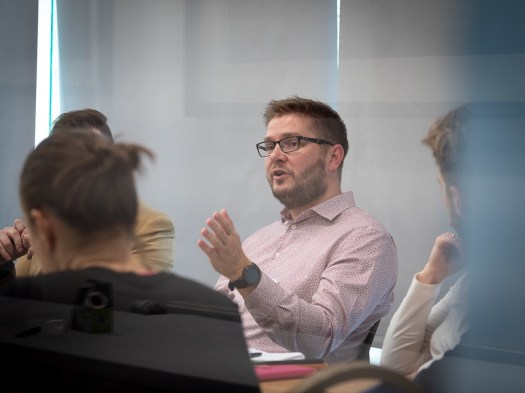
JP chatting

CommsCamp is something we at CAN have supported for years now. The “no agenda” concept behind the event means it is a genuinely different experience from other comms gatherings as it’s wholly shaped by participants.

You have no idea what is going to happen on the day – but the attendees and volunteers make something special happen every time.

CAN sponsored the inaugural CommsCamp Scotland in Glasgow two years ago – where we found our Lead for Scotland Leanne Hughes – as well as previous CommsCamps in the Midlands and North of England.

We think comms teams coming together to share insight is the public sector’s superpower. Unlike in the private sector, exchanging knowledge and ideas saves everyone precious time and public money from otherwise having to continually reinvent the wheel.

Collaboration opportunities

For the past 18 months we’ve been running free in-person collaboration days around the UK. Like with CommsCamp, these events bring people together who work in the public sector in the same region but for different types of organisations to share and build on ideas.

We brainstorm ways forward on how to engage with specific audiences or on common themes that cut across the public sector – NHS, local authorities, combined authorities, police, fire and rescue, and colleges. At the end of the day, participants come away with a solid plan of action to take back to senior management.

CAN also runs free online “hubs” for public sector comms with regular free learning webinars. The Public Health Comms Hub is for you if you run public health campaigns in health boards and councils. The Blue Light Comms Hub is for police and fire and rescue comms folk and council communicators who partner with them on campaigns.

The Fostering Recruitment Hub is our longest running online community and has more than 800 members. It’s UK-wide, and Leanne has recently started to host webinars tailored specifically to Scottish councils.

Better value

The reason the team at CAN are driven to support and enable collaboration is because we believe that public sector comms folk can get much better results and value for their advertising spend.

There is far too much public money – and your time – being wasted on expensive media that isn’t sufficiently targeted to audiences and certainly isn’t measurable in any meaningful way.

Yet, it’s more important than ever that comms professionals in the public sector can demonstrate impact and value from their campaigns.

These are the areas we can help you with:

  • Lowest cost-per-outcome online paid media. Using tested tactics that make a real difference to campaign outcomes like programmatic advertising (real-time bidding), Google Search profiling, specific audience segmentation, and optimisation of best-performing channels and creatives.
  • Improving user experience and interaction. Clear campaign landing pages based on content design principles, advertising tech that tells you if someone completes your call to action and remarkets to them if they don’t, and accessible and inclusive content expertise.
  • Unlocking budget and savings from owned channels. Facilitating improved advertising opportunities for your organisation’s media assets like website, print, email and out-of-home.

If any of this sounds useful, please feel free to chat with me, Leanne and our colleagues Matt and Dan at CommsCamp. We’ll probably be hanging around the cake table with intent!

Get your bake on: the CommsCamp Scotland cake table

by Sara Martinez

Get your bake on: the CommsCamp Scotland cake table

We’re getting closer to the big day – when CommsCamp hits Glasgow for the second time on Thursday 3 April.

As with all the CommsCamps that have gone before, cake will feature heavily – absolutely none of us have nick-named the event CakeCamp!

How it works

Raising funds for excellent causes is one of the very best things about CommsCamp events, and this is only possible thanks to you – for baking, buying and eating cake!

Bake a cake: If you’re able, we’d absolutely love it if you could bring along a cake you’ve baked. It doesn’t have to be a masterpiece – scones, fairy cakes, cookies – whatever you’d like to showcase.

CommsCamp Star Baker competition: Baking a cake will get you automatically entered into our competition – and who wouldn’t want to be crowned star baker?! We’ll also nominate two runners-up. 

Bring bought cake: We even love shop bought cake, so if baking isn’t your thing, we’d be very grateful for your bought offerings.

Eat cake: Gathering around the cake table is a lovely way to meet your fellow CommsCampers. We recommend wearing elasticated or loose fitting clothes, coming with plenty of cash (sorry, we don’t have a card machine) to exchange for lovely cake.

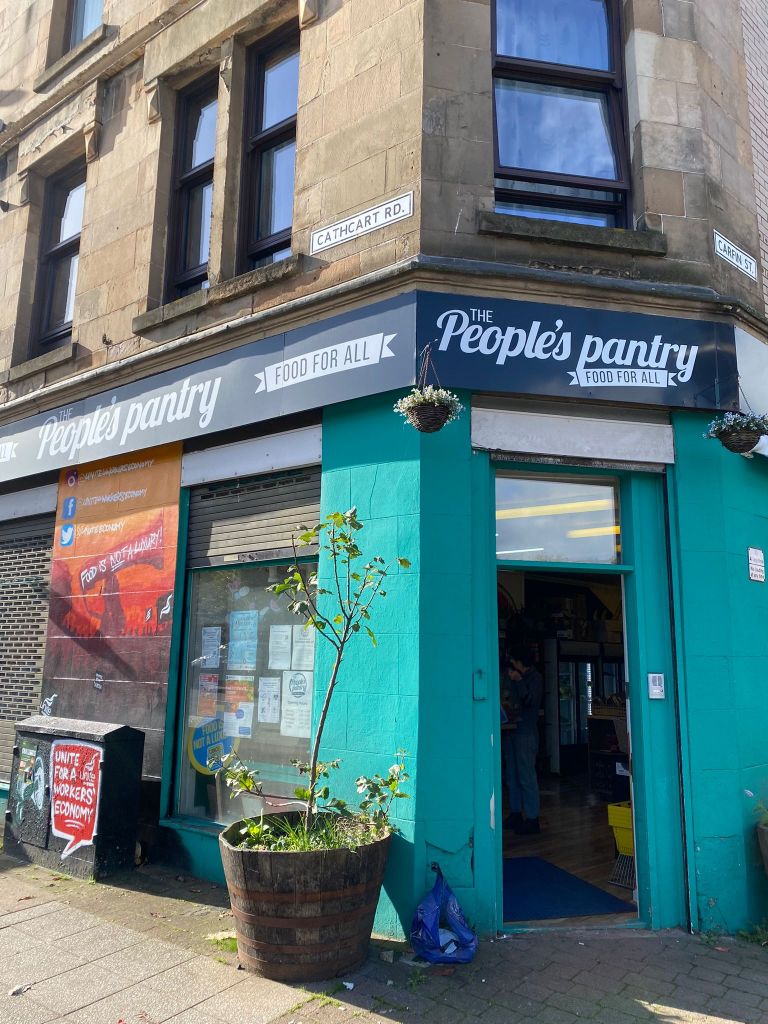
Your cakey-efforts will raise much-needed funds for great causes. Money raised from the cake table and collection buckets will go to The People’s Pantry in Govanhill, and we will also be making a donation to The Elephant In The Room – The Queen Margaret Union’s mental health campaign.

Food bank donations

The People’s Pantry will also be gratefully accepting any items you bring along for donation.

That’s it, really. Who doesn’t love cake?And what could be better than knowing your cake-scoffing will be helping support great causes?

CommsCamp Scotland supports the People’s Pantry

By Vivienne Wilson

Once again, we’ll be collecting food and toiletries for Govanhill People’s Pantry at CommsCamp Scotland. Look for the collection table when you arrive, which will be set up, ready to receive donations.

The People’s Pantry in Govanhill enables its members to buy a weekly shop with a value up to £30 for £4 per week. Annual membership costs £6. Govanhill is the most diverse neighbourhood in Scotland. A community consultation carried out by Govanhill Baths Community Trust a few years ago received responses in 52 different languages.

The most popular items are fresh fruit and vegetables, dried foods and toiletries. There are also chilled and frozen foods, which vary from week to week. Most stock is provided by Fareshare, a food redistribution charity and by local supermarkets, food providers and growers.

Donations of items such as toiletries or tins of tomatoes and beans would be very much appreciated as stocks of these items can run low. Please do not donate home cooked items such as home baking as the Pantry is not allowed to accept these items.

The People’s Pantry is fully subscribed and has become a much valued and well used facility in Govanhill. It is operated by Govanhill Baths Community Trust with both paid employees and volunteers serving the local community.If you would like to know more about the People’s Pantry or would like to donate food rather than bring products to CommsCamp Scotland, please visit their website: Govanhill People’s Pantry – Govanhill Baths

Pitching 101 from a first timer at #CommsCampScotland

By Ella Gorman

At commscamp, the agenda is set on the day – meaning that the brains in the room decide what is discussed. It’s a refreshing way to share ideas that really matter, not predetermined which was a new concept for me at my first CommsCamp last year. I’d never been to an unconference before and had no clue what to expect, but to pitch an idea? Well, let me tell you about it…

The organisers ask the room for pitches and a queue quickly formed. Pitches on X and alternative social media channels, how organisations use AI and how to professionally say no to communications asks caught my attention. Wasn’t too far from some of the thoughts I had myself!

Before I knew it, I had stood up and pitched my own idea (after heeing and hawing about if it was silly or not). I received some head nods to the pitch and my worries eased.

My advice? Don’t let the expertise in the room throw you. Dig deep, feel your burning questions and ideas come from within and shout about it! I did my first ever commscamp pitch on new professionals in the communications sector, wanting tips, hints and tricks for other ‘baby comms’ out there looking for their place. 

Was it a little daunting? Yes, but was it rewarding hosting my session and having fantastic expertise and invaluable advice for my questions? Absolutely! 

No matter if it’s your first time or you’re back again as an experienced CommsCamper, if you have an idea to pitch then don’t hold back – most likely someone in the room has your answer or some great discussion for it (or perhaps even the same idea). 

Take it from me, there’s absolutely nothing to lose and all to gain from insight from others in the room.

If you have an idea but need any additional support with formulating your pitch or support to run your pitch on the day, get in contact with your friendly organising team. We are happy to support anyone who may be a bit nervous about pitching for the first time. If that’s you, email us at commscampscotland@gmail.com

CommsCamp Scotland – let’s rock at the QMU!

by David Grindlay

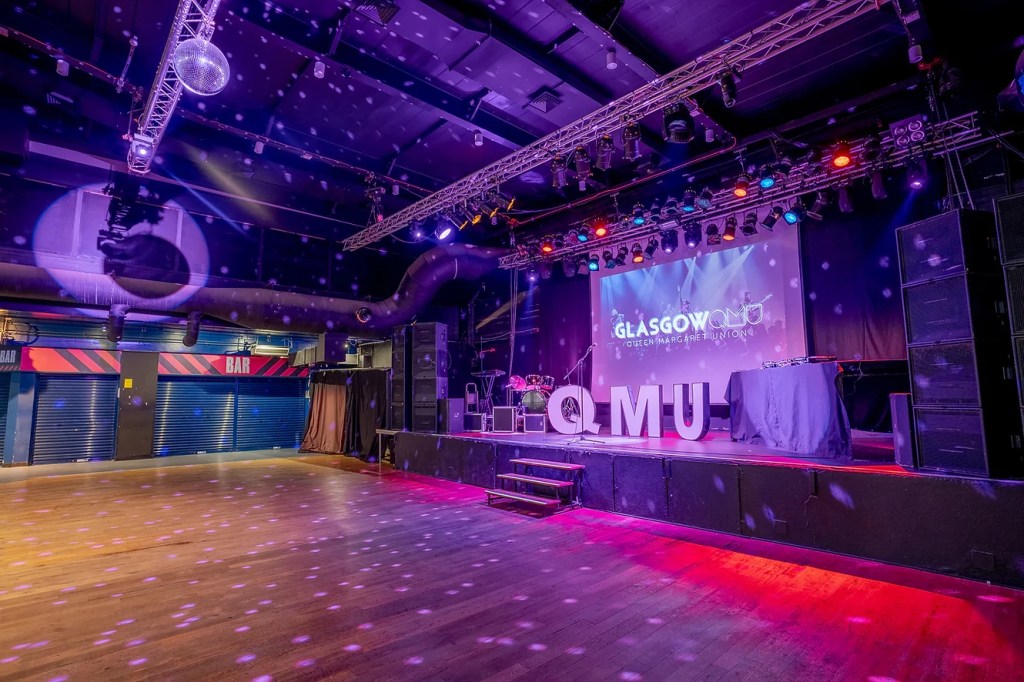
Buried at the north-eastern end of the magnificent Glasgow University campus is a brutalist/modernist building that will be your home for CommsCamp Scotland in April 2025

It sits in University Gardens between a mix of blonde sandstone created at the end of the 19th century and modern glass and open spaces of the 21st.

An ugly blister? A true carbuncle? Well, let’s have a look.

It’s murder on the dance floor: what the QMU feels like on a gig night

The new Queen Margaret Union (QMU) was built in 1968 after the much-needed expansion of the existing ‘women’s union’, founded elsewhere on the campus in 1890s after women were first allowed to matriculate at the University. (Yup, the Uni was founded in 1451 and yet …)

The expansion offered a social space for women to mix and congregate and perhaps was a marker for the future in terms of fun.

Offering tea dances on a Saturday afternoon in the late 60s, where men could be invited from the ‘men’s union’ down the road at the foot of University Avenue, things were quite refined.

Brutalist built beauty from 1968

But with the growth of ‘yoof’ music in the early 1970s, students soon demanded a more exciting mix of the student experience.

Early visitors in the 70s included Slade, Hawkwind, The Move, Black Sabbath, The Who, and Queen (who consistently blew the electrics btw).

The venue soon grew in importance as a medium-sized venue in Glasgow for upcoming bands on the make and became a preferred gig location due to its capacity combined with the design of the floor, balcony, and stage.

Legends were born and its status grew.

Shall we dance? Your home when in Glasgow and yes, we have a mirror ball – a first for Commscamp

Over the years it saw Kurt Cobain warned for smoking dope by Michael, the QMU porter after playing a blinding set. He was told to rearrange his priorities by Kurt, swiftly.

The legendary Smiths – part of the rider was for £20 worth of Gladioli – unable to source these locally in time, enterprising board members went around extracting daffodils and other flowers from various locations around the Uni – otherwise Mozza would not go on stage.

The Bangles being asked to share something by the crowd you might not want to … at least not on a first date >.<

And a few other tales I *may* disclose in person. Ask me.

These luminaries were joined by bands such as Soundgarden, Smashing Pumpkins, Hole, Garbage, Status Quo, Belle & Sebastian, Coldplay, Biffy Clyro and Franz Ferdinand who all did their stuff on stage at the QMU.

It rocked and we rocked. It still does.

So, if you want to absorb a shed load of ‘OMG’ moments and ‘his sweat lies here’ etc etc, head up to the first-floor bar at CommsCamp Scotland, where the original stage floorboards are there, and you can imbibe the soul and feeling of what made this great venue utterly amazing. Will turn a blind eye if you scrape a few shavings.

The QMU is quite a place – it is very progressive helping all. Always.

It supports many, many causes that help young people – this includes a charity for student mental health support that we will be collecting for on the day, Elephant in the Room. Please give a few quid if you can. Buckets will be around the place. It means a lot.

We’re also doing a Foodbank collection so please bring tins, packets etc.

So QMU, I love it – I want you to love it, it ain’t especially pretty, but it will love you back.

How do we go beyond awareness days?

by Ian Curwen

At Comms Camp Scotland this month, I led a session on diversity and inclusion –  moving beyond awareness days.

Awareness days are, as the name suggests, a tool for raising awareness. Raising awareness is more likely to be at the start of your diversity and inclusion journey.

For me, this means that if your diversity and inclusion communications calendar is largely made up of awareness days, then it’s time for a rethink.

I was pleased to see a busy boardroom at the Queen Margaret Union for the session. I was even more pleased to facilitate an engaging discussion with people willing to share their organisation’s approach and even their own experiences.

Thanks to everyone who joined the session and contributed. I’ve summarised my observations below. I’d welcome your thoughts too.

How diverse is your team?

We started with a prompt to consider how diverse our teams are. If they are not, then how can we communicate authentically to audiences we might not represent?

One of the participants commented on the small number of non-white faces at the event. This was a really interesting observation. As a white man, this wasn’t something I had considered until it was mentioned. That itself is telling.

It’s a long journey

The journey to being a more diverse organisation, where everyone can be their true self, is a long one. At times it can be isolating – especially if others don’t agree with the approach you’re taking. 

This means you need to be resolute and steadfast in your commitment. It requires the visible buy-in of leadership – especially if you plan to make changes to your organisation, its policies and priorities. 

One participant mentioned their chief executive grasping the issue of diversity. They reflected that, “the chief exec must have broad shoulders.”

While it is a journey, it’s not one with a clear destination. Things will change and evolve and there will be new challenges along the way. There is always further we can go and more we can do.

Awareness days can dilute or concentrate

In communications teams, we’re a bit cynical about awareness days. We know they can be overused, and they can appear tokenistic if the way we mark them isn’t properly considered.

Consider how much more powerful is it to see an organisation that celebrates diversity and is representative of its workforce and community in all its communications, rather than once a year.

That said, awareness days can be an effective way of introducing a topic or exploring specific challenges or issues for a community. They’re a way of helping someone walk a mile in someone else’s shoes. 

But, if you’re doing that, be careful not to drown out well crafted, engaging and insightful communications with volume.

In the room, we felt that fewer, higher quality communications were the way to go.

Curiosity and authenticity – speak to people

Awareness day communications should be those that enlighten your audience or explain a situation. 

As communicators we’re curious storytellers. This curiosity should help us find the interesting stories to tell. They should be interesting because they help people understand the community you’re talking about. 

If you belong to that community, they should sound authentic. 

The way you ensure they’re authentic is by reaching out to that community. Speak to them.  

I think that’s probably obvious, but it’s always worth remembering.

Expectation management

When you engage with an audience or a particular community or network, you should be honest about why you’re reaching out to them, what you are able to do for them, and how this will balance against your other priorities.

Where I work, we have 11,000 employees and 17 employee networks. They’ve all got some brilliant stories to tell, but we must ensure they’re not competing with everything else we want and need to say. 

If you’re telling an individual’s story, how are you going to support them and give them a safe space to do so? What do they get in return for sharing their story? 

If you’re reaching out to a community group, can you help them achieve their aims?

If you’re supporting a network, what are you asking of them? Is it aligned to their scope and expectations?

In the room, we heard about an organisation’s women’s network and how its main role was to organise social events like theatre trips. There is nothing wrong with that if the purpose is clear. But don’t pretend it’s a voice for women in the workplace. Don’t use it that way. 

In an ideal world, your network will have terms of reference and clear objectives, and you’ll be able to support them with clear communications ones.

Talk the talk, walk the walk

If your organisation is talking more than it has in the past about diversity and inclusion, what else is it doing? Is it walking the walk as well as talking the talk? 

There are lots of ways this can be demonstrated. A simple example that was mentioned in the room was committing to diversity on panels – agreeing not to speak at events that have a male-only or white-only panel of speakers – and telling the organisers why you are declining. 

How do you quantify and evidence progress?

Final thoughts

It was great to lead a session about a topic I feel passionate about. I loved hearing people’s views and experiences. 

The room felt united in the view that we need to move past awareness days to promote diversity. We agreed we need to be authentic and understand and engage our audiences to achieve that.

What else?

The session lasted 40 minutes and we packed a lot into that time. But there was a lot we didn’t cover, which I’d have liked us to. 

We only briefly touched on the current, less tolerant climate. We didn’t discuss intersectionality and how that shapes the narrative. We also didn’t explicitly cover the importance of allies to so many of our employee networks and community groups. Perhaps they’re pitches for the next Comms Camp.

Ian Curwen is a stakeholder relations officer working in the nuclear sector.

5 ways to use audio to connect with the public and your team… for free

You may have met Mark Steadman at commscampnorth. He came to sponsor his first unconference and ran a great session. So much so we asked him to write a blog post for those who couldn’t make it.

by Mark Steadman

The human voice is a phenomenal tool for building trust. We multiply that effect when we wear headphones, as the voices we listen to are physically so close to us.

I brought this up in the session I ran at CommsCamp North. But there are other ways the voice can be impactful and to help us create connections. So here are five ways you can use audio to bring your organisation and its service users closer together.

If you want a rundown of the equipment you’ll need, you’ll find that at the end of the post.

Option 1: Smart speaker bulletins

Where I work, we call Alexa “the lady in the tube”. If I ask her for a flash briefing, she’ll deliver a short burst of audio from my preferred sources. Google Home offers something similar too. People often give smart speakers to older relatives as gifts, as they offer useful things like voice calls and reminders.

Smart speaker bulletins are a great way to integrate your messaging into people’s homes. Adding your content to people’s devices is pretty easy and you can explain it in a handout or a short video.

You can use bulletins to let people know about important events in their area. * *

To become a bulletin source, you need to setup a free developer account with Amazon and/or Google. Then you can create a podcast, hosted for free on Buzzsprout , and link your feed to the bulletin you’ve created.

If you don’t have a smart speaker, you can use the simulator available in your developer account.

You can publish your audio to Apple Podcasts and Spotify, or keep it exclusive to smart speakers.

Option 2: Turn your newsletter or blog into a podcast

When we think about getting into podcasting, we can sometimes worry about having enough content. Well, a podcast is a way to get extra value from the work you’re already doing.

If you have a regular blog or a newsletter, you can make it more accessible by recording it as a podcast. This helps visually-impaired readers, and busy people who want to stay in touch but don’t have the time to read.

Here, all you need to do is sit and read through the article you’ve written. Add a brief intro and outro plus a call-to-action, like inviting the listener to your website. Make a few simple edits, export your audio file and upload it to the web.

  • You can host your audio with Anchor for free, but they’ll fight you if you want to publish outside of Spotify. It’s currently still doable, but we don’t know how long for.
  • The newsletter software Substack now offers podcasting hosting too.
  • If you’re just doing simple edits to audio, like cutting out mistakes, Audacity is a handy and free tool.
  • I have a course on developing a podcast from a blog or newsletter. Use the code commscampnorth for 50% off the price.

Option 3: Go in-depth

Podcasts work best when they’re regular and consistent in format. But there’s another way you can use audio to provide useful information.

Whether you want to share audio from a meeting or go deeper into a topic, you can host one-off audio on Soundcloud. It’s free, and you can embed it as easily as you would with YouTube.

Budget permitting, you could explore a limited-run series. Let’s say we’re gathering an aural history of residents from a particular background. A series of stories, produced with a little music and narration can be a warm and intimate way to explore a topic in detail. It’s also a wonderful way to engage communities.

Tools like Descript make it easier than ever to put together podcast audio. When you import audio, it’s transcribed by their AI, and you edit the sound by editing the text. It works just like a Google doc. You can then add music, sound effects, and other recordings easily. Plus you’ll be on your way to having a transcript that makes the work more accessible.

Option 4: A right to reply

You can give the public a voice, and offer leaders the chance to share their responses by creating your own Question Time show!

You can record a Zoom conversation between a local representative and members of the public, and publish the audio. This is a great way to welcome people who don’t want to jump into Zoom, or find it daunting.

Or you can gather questions from the public in the style of Points of View. Provide an email address or a simple Google form where people can attach a short recording. Then send that to the person who needs to answer the question, and let them record their reply. Tie it off with a short intro and outro, and you’ve produced an episode without everyone having to be on the line at the same time.

Option 5: Create an internal podcast

If you work within a department with lots of people who are out and about, you can keep them up-to-date with a private podcast feed. This is especially handy for drivers who can’t spare the time to read a daily or weekly briefing.

There are a few things to consider around ease-of-access for listeners, and ease-of-admin for you. Most private podcasting options don’t work with Spotify, and the ones that do (like Supercast) will charge you. If you’re particularly worried about locking down your audio, I’ll briefly explain another route in a tick.

There’s less of an expectation of high production value for a private podcast, but don’t rule it out. I produce a couple and listeners benefit from feeling valued, heard, and addressed directly.

Wrapping it up

Here we’ve looked at a few different formats, some of which aren’t “traditional” podcasting, but all use the voice to connect us together.

  • Smart speaker bulletins are great ways to get up-to-the-minute info out to members of the public, especially those at risk of isolation.
  • You can make your blog or newsletter go further by bringing it to people who don’t have the ability or capacity to read it.
  • One-off audio stories or limited-run series allow you to go deep. And you don’t have to be a qualified audio engineer to make them!
  • Members of the public can get a right to reply by recording their questions, and allowing department heads to publish their responses.
  • There’s always someone on your team who doesn’t read the weekly email. Now you can give them a private podcast feed.

The gear you need

  • The Samson Q2U is a great mic to get started with, at less than £90.
  • If you don’t have a pair of headphones handy, these Audio-Technica ones sound good and don’t cost the earth.
  • To gather audio interviews, the Zoom (not that Zoom) H1n is a handheld recorder with an in-built mic. It records audio to a micro SD card, so it’s easy to transfer to a laptop.

And finally

As you can probably tell, I love talking about this stuff. If you’ve got questions about how to implement any of this, you can book a quick half-hour chat with me. Together we can run through your options, and find a solution to meet your budget.

Free stuff for comms professionals

CommsCampNorth is all about sharing – ideas, challenges, solutions. And cake, of course.

I ran a session at the end of the day of our Bradford event on 13 October, to put together a list of the freebie apps and tools comms professionals use in their working lives. I promised to share this list, so here it is, with a few extras thrown in for good measure. Thanks to everyone who came to the session and contributed – team effort!

If you have more you want to add in the comments below, feel free.

‘Free’. Get it? 😉

Some of these apps listed below only have a free version if you’re a charity, or have a version that is cheap, and is recommended even if you do have to pay. If you need something done for a one-off project or event, it’s also a good idea to make the most of free trials offered for products and apps.

Two people at CommsCamp in front of a timetable/grid with session titles displayed on coloured post it notes
CommsCampNorth is free – thanks to our wonderful sponsors

Photography

RemoveBG: Remove the background from any photo – https://www.remove.bg/

Remember what David Banks our resident media law expert said at another session at #CommsCampNorth; only use images you have a licence for. There are lots of image sites out there, here are just a few I like:

Failing that, take your own photographs, and try and do a stock photography day at least once a year. Portrait mode on an iPhone may not be as good as a professional photograph, but it’s usually better than using the same old stock shots that come up time and time again.

Video

Music

Social media

For scheduling tools Hootsuite and Buffer were mentioned, or use the schedule tool in Twitter (quicker and free, but without the more advanced analytics)

‘Design’ (sorry to all the graphic designers out there!)

Getting stuff done

Advice, support and training

Everything else

The Hemingway app helps make your writing clearer … more plain English, less use of the passive voice – https://hemingwayapp.com/

Scribe records your screen activity and turns it into step-by-step guides – https://scribehow.com/

There are a whole bunch of people on TikTok who provide help and support in much smaller chunks to consume than old-school YouTube videos – Danielle Canva Video ideas, Sam Despo, Kevin Stratvert are just three.

And my favourite tip … our comms community!

Don’t forget that #CommsCamp and #CommsCampNorth are FREE and always have been, but if you can’t wait until the next one for advice and support, go to the Public Sector Comms Headspace group on Facebook and use the search function to find answers to all sorts of questions, or post your own. You’ll often find that someone else out there has already done the work that you need to, saving you time, which is of course precious.

THE EYES HAVE IT – CREATIVITY AND INSPIRATION AT COMMSCAMPNORTH

We’re really pleased to welcome back Touch Design as GOLDS sponsors for CommsCamp North. Do say hello to them if you are coming.

The eyes have it – creativity and inspiration at CommsCamp North
Touch will be setting the gold standard in October as a headline sponsor of the ever-wonderful CommsCamp North, this year being held in the West Yorkshire city of Bradford.

Tickets are of course once again a sell-out with hopeful attendees now needing to subscribe to a wait list for the chance to come along to one of the highlights of the year for public sector communicators and marketeers.

If you are fortunate enough to have got hold of a ticket, we can’t wait to see you at Bradford’s city centre arts venue in due course. We’ve been sponsoring the event for a number of years and delegates that we have met at the ‘unconference’ have often later become not only clients but good friends. Following the desolate online Covid years, it feels more joyous than ever to be able to see people again face-to-face and chat long into the evening.

In meeting team Touch this year, you may feel we’ve all gone a bit ‘googly-eyed’, and that won’t be the drink talking. Instead, to demonstrate the bottomless creativity inside each and every one of us, our display stand will have boxes of ridiculous googly eyes for you to customise the mundane objects around us and to transform them into faces of pure irreverent, genius. For an example of what we’re looking for, please meet Rexel, the excitable-looking office shredder.

Ahead of the event, you can fine-tune your creative instincts by looking for faces in everyday objects (‘facial pareidolia’, if you’d like to know). Sources of creativity and inspiration are all around us, and often, the spark happens when least expected. Keep an open mind, let ideas flow, and don’t try too hard. Everyone is creative in their own ways though, what works for some, does not suit others. There is no uniform way to be creative. You can practise at being creative though, and you can get better at being creative, and you can also give us a call, if you’d like, if you hit a brick door. We’re good at re-opening closed doors and walking down new hallways.

5 things to remember for CommsCamp North in Bradford

CommsCamp in real life has been a LONG time coming … we’re really looking forward to seeing you all again and just being in a good space with great people. If you’ve got a ticket for CommsCamp, there are a few reminders before you come along. If you can no longer make it, please let us know as we have a waitlist of people still wanting to come.

So if you are coming, here are five things to remember before we see you on October 13th (or the 12th, if you’re coming to our beer and curry social):

There will be cake … so please bring cash

There’s going to be cake, but there’s only going to be cake if you bring some. But you don’t have to bake – although if you do, you could win prizes – you can just bring a cake you bought from a shop (although don’t try and pass it off as your own … WE WILL KNOW). Pieces of cakes are then ‘sold’ for donations to our charity this year, and you also get a raffle ticket to win marvellous prizes* so please bring cash with you. We don’t have a fancy card machine! Read more on Kate Bentham’s cake blog.

Bradford's centenary square

Bring food bank donations

Our charity this year is the Bradford Central food bank. We will have a donations table at CommscampNorth and will welcome all contributions of non-perishable food and household products, whether large or small. Popular items include tinned puddings, UHT milk, jam, tinned tomatoes, pulses, tea, coffee, loo paper and more. Read more on Josephine Graham’s blog post.

Have a think about pitch ideas

The beauty of an unconference is there is no agenda – you get to decide on the day what you want to cover. And this means you pitch the ideas you want for sessions. Pitching is easy, so don’t be daunted by it … and it always brings up some brilliant session topics.

What makes a session topic? This could be a problem you’d like to collaborate on, something they did well or an issue coming down the line. Have a look at our Facebook group to pitch an idea and join the debate.

Once we have a nice big list of session ideas we’ll share them into timeslots across the day in the six break-out areas. Each session lasts 45-minutes. Overall, there will be more than 30 slots.

So have a think in advance of something (or things) you’d like to pitch.

Sort out your transport   

Don’t forget your train ticket .. and if you’re driving, you should know that Bradford is a clean air zone, so you’ll need to pay to come into the city. If you’re coming to CommsCampNorth by train, we’ll have a walking train from the station so you don’t get lost … it leaves at 9.10am. Read more about transport, parking and travel on Bridget Aherne’s blog post.     

The social the night before is a BYO restaurant 

Finally, if you’re coming to our social curry the night before, please note that – like many restaurants in Bradford – it doesn’t have a drinks licence, so it’s a BYO. There is a supermarket very near, so you can stock up there. Read more on David Grindlay’s curry blog.

*Brilliant stuff we’ve found in charity shops or on eBay