We’re having a fallow year for commscamp in 2019 but we’re be back in 2020

19012231723_1f01e84dab_o


by Dan Slee

Ladies and gentlemen, cut yourself an extra piece of cake and try to be brave… there will be no commscamp in 2019.

There will be no cake stall by the canal, no fresh ideas will be crafted in Digbeth and no new friendships will be struck in the sunshine eating an ice cream.

Stop the clocks.

Muffle the bells.

We’ve decided to take a fallow year for the Birmingham event after six straight years to let the cake bakers recover.

But wipe those tears away….

But the good news to help you wipe away your tears and blow your nose is that planning is already taking place for commscamp in 2020 and we’ll be back refreshed at the Bond Company on 15.7.20.

And we’re also making an announcement imminently about #commscampnorth our touring event for those in t’north for people as call their tea a brew and who y’know, speak to each other on buses.

Why a fallow year?

Someone once said that commscamp appears effortless but the truth is it takes some planning. My colleague and good friend Emma Rodgers was always going to take a 12-month sabbatical this year and be back in 2020. I was ill earlier this year and my time allocated for planning was lost. Rather than chuck something together it made sense to take a year off.

I’ve held off announcing this just to see if anyone would notice and the touching truth is they have. There’s been a number of messages which has prompted plans for 2020.

The place for commscamp…

Is there a place for Commscamp? It’s a question we ask ourselves each time we run it. The event is deliberately democratic. Anyone can pitch an idea and if you’re public sector comms you can come. It’s also free and it is blindingly important that it remains so.

I’ve no interest in charging for the event and we don’t really have to mount a year-long campaign of getting in people’s faces to flog tickets. I’m really glad about that. When its commscamp time we’ll tell you. Otherwise, go about your business. We even only have sponsors who get the event and who we like.

While there’s a need to come together in an informal way compare notes and find a better way of doing things we’ll still do it. When that ends we’ll pack up.

I’ll be watching my daughter’s leaver’s school assembly this year

As fate would have it, days after we decided to take the year off my daughter came home from school with a letter. The letter gave the date of her leaver’s assembly as July 10, the day we’d earmarked for commscamp.

So, this year, I’ll miss being with people by the canal in Digbeth but I’d have hated to have had to miss out on my daughter’s last assembly at junior school.

Stay in touch

Don’t miss out on commscamp and commscampnorth news. We’ll update this site and keep you posted with our commscamp email bulletin. You can sign-up here.

Picture credit: Nigel Bishop.

Video credit: Steven Davies and Sophie Edwards at filmcafe.


What a commscamp first timer thought

cc114

by Illesse Uppal

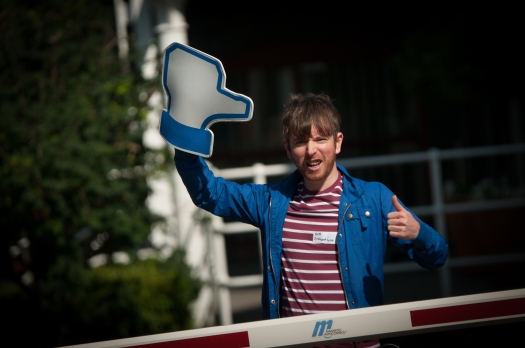
Having never attended a Comms Camp – or unconference – before, I gingerly made my way over to the giant foam finger waiting for me at New Street, my brain buzzing with thoughts of ‘what will it be like?’… ‘Will I get anything out of it?’… ‘What if I suddenly forget how to network?!’

My nervous energy began to be dissipate however as I was met with friendly faces and an air of excitement as we made our way over to the venue. I even made a few friends on the walk over.

Having no idea what to expect, the day exceeded my expectations and reminded me exactly what I love about working in comms.

From the innovative ideas flying back and forth, the open and honest atmosphere surrounding the talks and the eagerness to get back to the office and try out some of the ideas.

Over a week later and I am still on a high from the event. Networking with likeminded individuals not only gave me various campaign ideas to use back at work, but also allowed me to have meaningful conversations with people who share the same passion.

I have renewed zeal in my day job, and I am looking forward to putting forward some of the ideas I picked up on the day.

With just over two years in comms, I felt a bit inexperienced compared to others, however it was clear that it didn’t matter as long as I brought an open mind and enthusiasm to the table. I walked in to Comms Camp some what of a novice and walked out feeling like a Comms aficionado.

It’s safe to say I am already counting down the days until next year’s event.

Illesse Uppal is is marketing advisor at West Midlands Employers.


Our pre-event curry now has a dash of football in it

23809869648_296ea1fc3d_o

Our pre-event social has been the stuff of legend as a chance to meet people ahead of the event.

We’ve gone for the same approach of a trip to the pub and then curry… but we’ve also added a special screen in the curry house so people can follow the England v Croatia World Cup final.

Let no-one say we can’t do emergency planning here at commscamp.

So, the plan is still to meet from 6pm at The Anchor, Bradford Street, Birmingham, B5 6ET. This is a real ale pub that’s a short walk from the city centre.

Next up, at 6.45pm we’ll head to Manzils, Digbeth, (the street), Digbeth (the area), Birmingham, B5 6DT. This is a curry house that first started trading in the 1960s so has the badge of a good place to eat.

The lovely management have allowed us to bring in our own special screen and projector just for us so we can watch the big match.

The eventbrite for the event is here.

See you there.

Picture credit: Your Best Digs / Flickr


The 9 types of session that take place at commscamp

gran

Always, the build-up to commscamp has been exciting and this year is no different.

At commscamp, there is no agenda. This gets set on the day and it is always fun to see the ideas emerge.

Of course, what gets kicked around ahead of time is not always what appears on the day but it can be a good indicator.

When commscamp first started in 2012, the focus was on platforms and tools. As time has gone on, this has shifted.

What types of session are there? Here’s my take.

The channel session

These focus on a particular channel and trying to understand how to use it better. Home to the old favourite: ‘Is anyone using Snapchat? Because I don’t even begin to understand it.’

The channel sub-genre session

Not content just to be using a rarely used platform this session fits around a real desire to see how a particular platform can be used for a particular audience.

Like: ‘Can we work out how to use Instagram for dog walkers who don’t pick up after themselves?’.

Or ‘Can we use Twitch for realtime CCTV monitoring.’ (Answer: probably not).

But I always think the four people who congregate around a particular topic are among the happiest of campers. They’ve found their tribe. It may only be four. But they have a love that endures and we will never understand.

The therapy session

This one is a belter. It is the AOB of commscamp and exists to be a safe space for venting your chest. Chatham House rule applies. If you are in it, it feels so much better to unload about an issue that’s bothering you and know that others have been in the same boat too.

The horizon scanning post 

This session sees a discussion around something new and different. Most people won’t be up to speed on the topic but it deserves some of your attention as you’ll find out about something. Going back a few years, I first heard about WordPress as a website and infographics at one of these sessions. We did virtual reality last year. I try and go to at least one of these to expand my knowledge.

The sharing the sweets post 

This session sees someone do something quite well and share how they did it. It’s rarely a 45 minute spell of someone holding court. It often starts in one direction and moves somewhere entirely unexpected.

The punch-up

Some of the best sessions I’ve ever been to have involved borderline raised voices and tempers. It’s never quite spilled over into a discussion on the car park, I have to say. The session about press releases being over from one of the early commscamps was a thing of beauty.

The specialist session

These sessions are run by experts in their field and can cut through months of anguish. I’m thinking here of David Banks, the media law expert. Or Andy Mabbett on wikipedia.

The plea for help session

These ones start with a request for all hands to the pump. The session proposer is bailing out in a sinking boat and wouldn’t mind a hand. These can bring surprisingly good results as people rally round. In the early days of social media, the plea was often to try and understand it, which feels slightly archaic.

The non-digital session 

While the focus for commscamp has been digital we’re not against the idea of people talking about some good old fashioned analogue issues. Like should we have a council newspaper. Or whether posters are always a good idea (A: not always, but they can be.)

The corridor session

These are gems. These are what makes commscamp beautiful. The chance conversation that leads to a wider discussion with someone you may or may not have met. They can take place in the corridor, during a lunch break or sat by the pool (actually, the canal).

Qualifications you need to pitch for a session yourself at commscamp

You need a ticket and a pulse.

That’s it.

We find that anything more just complicates things.

You can see the ideas emerge for sessions for commscamp in our Facebook group here.

Picture credit: Nigel Bishop.


#commscamp ticket release info

commscamp Twit header 1500x500

We’ve been on the road to Sheffield so far this year… and now we’re coming home.

The 6th annual commscamp will be held at The Bond Company in Birmingham on July 12.

We loved it in Sheffield for #commscampnorth but there is nothing like the magic of the original event.

For those that don’t know, this is an unconference for public sector comms people. It happens because of volunteers and lovely sponsors. The aim is to do, share and help each other do things better.

There will be THREE chances to get a ticket. They will be released from a link to a secret eventbrite page posted ON THIS PAGE as well as on our Twitter @commscamp.

6.6.18 at 10am

11.6.18 at noon

13.6.18 at 9pm

Good luck!

My life changed at an unconference and I hope yours does to

34368493546_d1b0c3965e_o

by Dan Slee

I wouldn’t be doing what I’m doing now without an unconference.

There wouldn’t be comms2point0.

There wouldn’t be this blog.

There wouldn’t be the things I do that I love on a day-to-day basis.

The starting pistol fired at an unconference in 2009. It’s all because of that.

Why did I go to that first one? Because it was in Birmingham not far from where I live and some people who I rated were going. I’m glad I did go. It was mind blowing. Ten people from that crowd of 120 went on to start their own company inspired in part by what they heard and said that day. I’m one of them. I’m still friends with people I met that day.

Why was it mind blowing? Because I realised that my voice could count.

But do you want to know something truly remarkable? Your voice counts too.

The beautiful thing about that first unconference is that job titles were left at the door and anyone could pitch for a session, make a point, talk to someone over a cup of coffee or leave a session early.

The beautiful thing about #commscampnorth is that these principles remain. Myself, Bridget, Eddie and Emma are clear on that.

The amazing thing about doing comms in the public sector is that it can change lives for the better.

At #commscampnorth, I’m looking forward to seeing some new ideas.

But I’m also looking forward to the reminder that people are not alone.

There is a tribe of people like you and me.

It’s alright.

It’s going to be alright.

In fact, it’s going to be bloody brilliant.

As the great Sheffield bard Jarvis Cocker once wrote: ‘Something changed…’

10 things I took away from an unconference

170427CCNorth-144

by Bridget Aherne

This is not a drill – we are  24 hours away from #commscampnorth so get ready to get yourself to Sheffield for some lovely learning and networkin’.

We’ve got a bit into our Pulp theme, being in their home town and all that, and continuing with that: you’re not thinking of going all Ian Dalton on us and bailing out before things have even begun?

If so, let us try and convince you to channel your inner Jarvis Cocker, go the distance and make it on Friday.

We’ve got a vested interest in convincing you to come – we’re the organisers and we don’t want to be eating the sarnies we’ve bought in until June – but we’ve also got 10 genuine gems to share, if you’re wobbling right now and thinking of cancelling.

These are things that we got out of previous unconferences that have made us and the day job better…

  1. Free learning. As a public sector communicator, what other events will you attend this year at no cost?
  2. It’s rare thinking time away from the office that isn’t your holiday. Precious time to think, develop new ideas and not just do the job.
  3. A chance to work with others on the issues facing you in the day job right now because the sessions are agreed there and then.
  4. Therapy and solidarity. It’s a safe space to talk about new ideas or that problem that’s bugging you. Following on from reason three, if you can’t come up with the answer, other people will be living it too or can empathise.
  5. Cake.
  6. A raffle.
  7. Finding out something you didn’t know. A new skill, some insight into a social media channel you’ve not used before or tips for a good internal comms plan – all things we’ve taken away from other unconferences.
  8. Cake.
  9. Meet some amazing people. We’ve widened our professional networks and worked with many of these people since in many different guises. Better still, we’ve made some friends for life.
  10. Refocus, reenergise and fall back in love with your work. Being a public sector communicator is an amazing privilege but can also be incredibly hard work when you’re communicating cuts, difficult adult social care issues or serious incidents. Every unconference we’ve been to has helped us remember what’s good about our jobs and why we do them.

Hopefully, that gives you the Jarvis Cocker-like discipline to go all the way and make it on Friday and we’re looking forward to seeing you there*.

*On a serious note, if you can’t make it, please let us know as we have a long waitlist and want as many people as possible to be there on the day.

you’ll need to bake if you’re coming to #commscampnorth

170427CCNorth-114.jpg

by Kate Bentham, commscampnorth cake monitor

I’ve done my research and it turns out that there’s loads more to Sheffield than steel, hills, and Def Leppard. It’s now also hosting the famous Comms Camp Cake Table as it continues its tour of the world, taking cake to the masses, giving people what they want, powering comms on baked goods alone.

I’ve been lucky enough to be the Official Cake Table Monitor since the first CommsCamp in Birmingham in 2013 and for those who don’t know the situation with the cake table let me fill you in on a few pointers.

  • The cake table only works because of the lovely people who bake cakes and bring them along for others to share. If you can, please bake a cake. It doesn’t have to be a showstopper. A batch of fairy cakes, a traybake or anything else that travels well will be much appreciated.
  • If you do bake you will be entered into the CommsCamp Star Baker competition. It’s a fiercely fought contest with prizes for the winner and 3 runners up.
  • If you’re not a cake baker, don’t worry, there’s no shame in bringing along a shop bought cake, we appreciate all cake – although please don’t try and pass it off as one you’ve made. You may think that adding a bit of decoration, or taking it out of the packet and putting it into a tin will fool some but we’ll find out. We’re cake professionals.
  • We also need cake eaters, and not only because it’s amazing how conversations and networking improve with a bit of lemon drizzle, but because we’re after your money. In return for a slice of yummy cake we ask those that can to donate to charity. Since CommsCamp started in 2013 our lovely attendees have raise over £1000 for local charities. Proof, if proof were needed, that comms people are kind, generous and massive fans of cake.
  • This year all money raised from the cake table will go directly to The Sick Children’s Trust – Treetop House which provides free accommodation for families with children on intensive care wards at Sheffield Hospital. This charity runs entirely on donations so please look out for the donation bucket on the cake table and give generously. Just think how much you’d pay for a slice in one of those fancy coffee shops, and give it to this amazing cause instead.
  • At CommsCampNorth it’s OK to eat cake for all your main meals and any snacks in between. You’ll like it. It’s like when you get to eat chocolate for breakfast on Christmas morning. Perfectly normal.
  • As an experienced cake eater, my cake table survival tips are ease any cake guilt by visiting the gym the day before or take part in the CommsCamp Runch, wear baggy or elasticated clothes to allow for tummy growth, and bring the big coins to donate to The Sick Children’s Trust.
  • And remember, scientists have proven that all cake calories consumed during a CommsCamp don’t count. Bonus.

So, happy baking, happy eating, happy CommsCampNorth. See you with your baked goods at the cake table on April 27.

Kate Bentham, or Cake Bentham as I was once introduced as, Official Cake Monitor (best job in the world).


How to create a more creative approach

170427CCNorth-168

by Jonathan Cross, Touch Design

Is creativity a gift that some people have and some people don’t? Are some people ‘naturally creative’ or are you someone ‘who does not have a creative bone in their body?’ The simple answer is that we are all creative. And we are as creative as we allow ourselves to be.

We were recently given a brief by East Midlands Ambulance Service (EMAS) who wanted to show the benefits of working at EMAS to student paramedics due to graduate. One of the biggest issues facing the NHS, locally and nationally, is the ability to recruit and retain staff. We played around with images and then we played around with words… ‘EMAS is an amazing place to work’ became ‘EMAS is amazing’ which became ‘EMAZING’. Often there is enough complexity in organisational structure and mission that our job is sometimes just to make things simple. #EMAZING is spreading around the organisation, invoking real pride in the job and inspiring colleagues to spread the word.

Is this itself inspiring creative or is it simply just us doing our job. The job that we’re paid to do. What is ‘being creative’? Is it a trait that is assigned to some, and not allowed for others? Do we all have the permission to be creative?

Creative sometimes means taking a step back from the norm. There are many tasks in our everyday working lives that we have done countless times before. It is easy to replicate what we did the previous time. It saves time, money and effort. But taking a creative approach can reinvigorate a piece of work, add a new dimension, and spark a light on a new way of working.

One thing we’re sometimes asked is ‘how can I be more creative?’ or ‘where do you get your ideas from?’ We can provide some hints and tips but there’s no one answer. You have to give yourself permission to be creative. You have to find the time to be creative. And you have to believe you have the ability to be creative. Given time and an open mind, ideas will flow. And where there are enough ideas, there will be a good idea.

Here are some thoughts to help you with your creative thinking:

  • The creative process is aided by a good brief – if you are the client, try to provide as much relevant background information as possible.


  • Consider the ‘framing’ of the issue – thinking about the issue as a problem to be solved may be one way. But all issues can be considered in different lights. Is there another way of looking at your problem?


  • Come at the issue from a different angle – place your issue in another context – what would happen if you wildly exaggerated it, what would a child think of your issue, how would it work in the countryside, what if it was coloured orange, could you build a Lego model of it? None of these approaches are likely to produce the campaign you need but they will help you gain different perspectives.


  • Play with an issue – and have fun. Here at Touch we like to have fun with our work. A brief came in yesterday for a falls awareness campaign and there’s now a doodle of a banana skin on the desk pad. That’s too throwaway for a serious campaign – the campaign needs not only to be fun but functional and suitable for the audience – however, it gives us a starting point. And who knows where that will take us to? At the last point that banana sketch had been safely disposed of in the bin and transformed into ‘Steady Eddie’ – the wise cartoon man who knows all about how to prevent slips and trips…


  • Close the door and open another – there’s only so long you can play around with a certain idea. At some point you’ve got to close the door on that idea, walk down the hallway, and open another door, to another idea. Open and close enough doors and you will discover a room of surprises.


  • Take different approaches, put yourself in a new context – sometimes the best idea will come when you least expect it – when you’re in the shower or walking to work, from out of the blue inspiration will strike. If you’re still waiting for inspiration, put some dedicated time and effort into it. A cake will only come out of the oven if you put the right ingredients in the tin. Creativity sometimes needs a recipe.


  • You may not have the solution – sometimes despite the best efforts and the most dedicated thought, you may not find the answer you want. That happens, it’s just the way things are. However, you are not alone. Ask the person across the desk. Phone a friend. Ask a stranger. Form a focus group. Listen carefully. The answer is out there.


  • Still stuck? Leave the office, get some fresh air, come back, then give us a call. We’d love to talk through your ideas. Something #EMAZING may well result.


This post was written by Jonathan Cross of Touch Design as part of their support for #commscampnorth. They are good people. Very good people. Seek them out at the event where they are looking to pitch a session on creative play. Or via @teamtouchdesign on Twitter.

All 143 past commscamp and commscampnorth sessions set out in a great big lovely list

CommsCamp16-197

There’s been a frankly staggering 143 sessions at the seven commscamp and commscampnorth events since they started.

Each one has lasted up to 45-minutes and has at times generated rather heated debate.

New ideas have been shaped.

Old ideas have been trashed.

If traditional events with slides are what someone thinks people want to hear of past achievements then the unconference is a chance to tackle what is next. There’s a space for both.

Since they started 800 attendees have come along, pitched a session, met new people, baked cakes and learned things.

But what would a list of all the sessions look like?

I thought it high time to look back at the sessions to see what they looked like. So here is that list.

What strikes me is that I’d love to have been to lots of the sessions on the list I never got chance to get to.

Who wouldn’t want to go to a session called: “How to avoid looking like a Nazi”?

I’ll bet the small team comms session was good but I think I caught the last 10 minutes.

Reading through makes me excited for the two events planned for 2018. If you are coming you can add to that.

https://platform.twitter.com/widgets.js

How great is that?

A list of sessions

Here’s a snapshot of previous topics. The list has 2013 at the bottom and as time passes the most recent sessions are towards the top.

  • Income generation.
  • Dealing with viral social media posts.
  • How to live stream.
  • Comms and professionalism.
  • GDPR: WTF???
  • How to avoid looking like a nazi.
  • Media monitoring.
  • Creating a social calendar for staff.
  • Re-branding.
  • Non-profits seek public sector partners for love and comms.
  • Help and positive stories co-production, please.
  • Supporting non-comms to use social media.
  • Image banking
  • Data story telling.
  • Ideas for your next campaign.
  • Writing a design brief.
  • Applying games technology.
  • What have we learned about emergency comms this year?
  • Video and virtual reality.
  • Inclusive and accessible comms.
  • Team welfare.
  • Motive people to tell stories when change is all around them.
  • Place marketing.
  • Open data.
  • Facebook groups.
  • The press officer is dead long live the press officer.
  • How to make joint campaigns work
  • Therapy.
  • Blogging platforms and tips.
  • The skills and confidence to change sector.
  • Nudge.
  • How do we do our jobs ethically?
  • Middle manager comms.
  • We need to talk about transformation.
  • How to show colleagues how busy we are.
  • Elections group hug.
  • Photography top tips.
  • Employer engagement.
  • Agile and digital: what can we learn from it?
  • Tiny teams.
  • Social media in a crisis.
  • Customer segmentation: sharing best practice.
  • GCS: What it is and what it can do.
  • A get things off your chest session.
  • Social media resources and evaluation.
  • How to handle trolls.
  • Creating a culture of staff advocacy.
  • Infographics.
  • Digital collaboration.
  • Comms for budget consultation.
  • Evaluation and impact.
  • Legal and trolling.
  • Councils doing stupid things.
  • Kinder comms.
  • Social media and algorithms.
  • One person or small team support group.
  • Internal comms.
  • Change what you are facing at the moment.
  • Social media management.
  • Communicating across health and social care.
  • Engaging in a fractured landscape.
  • Reviewing internal comms.
  • Integrating social media.
  • Brexit and PR. Discuss.
  • Bullying.
  • Video comms.
  • Therapy.
  • Digital advertising.
  • Universities and other comms working together.
  • Comfortable communications.
  • How to manage comms in uncertain times.
  • Practical tips of prioritising.
  • Snapchat.
  • LinkedIn.
  • Saying ‘no’ to Twitter.
  • Comms and Pokemon Go.
  • What do you need to lead?
  • How are we doing?
  • Therapy.
  • Communicating with a single voice.
  • What are the big comms priorities?
  • ‘And another thing…’
  • How do we engage?
  • WhatsApp.
  • My intranet is worse than yours.
  • Video beyond YouTube.
  • Is Facebook dead?
  • Media law and comms.
  • DIY comms.
  • Innovative ways of listening to lesser heard services.
  • Failcamp. What failed and what I learned. Chatham House rule.
  • Instagram and the local community.
  • What would you do with £500,000 for a social media campaign?
  • Periscope? What is it for?
  • Influencing the top bosses.
  • Paid social media?
  • Comms planning.
  • Evaluation GCS performance framework.
  • 40,000 people to engage and no money to do it with.
  • Collaboration in crisis scenarios.
  • Online community management.
  • Legal advice.
  • To video or not video.
  • Environment Agency flooding comms tips.
  • Data visualisation.
  • How are we doing?
  • Nudge and behaviour change.
  • Should we be using new channels like Snapchat?
  • Doing the intranet with comms teams.
  • Making content work harder.
  • What digital skills do we need?
  • Content marketing?
  • Strategies for engaging.
  • Communicating with businesses.
  • Change Cambridge.
  • Online newsrooms.
  • How to transform internal comms.
  • Sharing creative campaigns.
  • Digital budgeting for policy.
  • Wikipedia.
  • CPD for comms.
  • Thunderclap and digital campaigns.
  • Working with the voluntary sector.
  • Geographical hashtags.
  • Working with the voluntary sector.
  • Any WordPress questions answered.
  • Networked culture change.
  • Twitter is pointless. Discuss.
  • Better strategic planning.
  • Are comms the blockers?
  • Social media listening and monitoring.
  • What can I do now my team has been slashed in half?
  • Managing comms risk.
  • Culture change.
  • Future comms.
  • Quick agile web user testing.
  • What we need isn’t a comms plan.
  • How to tame your dragon.
  • Lone comms people.
  • Change and your community.
  • Comms teams under stress.

Want to hear about commscamp and commscampnorth info and ticket releases? You can sign-up to the email list here.

Picture credit: Nigel Bishop.